
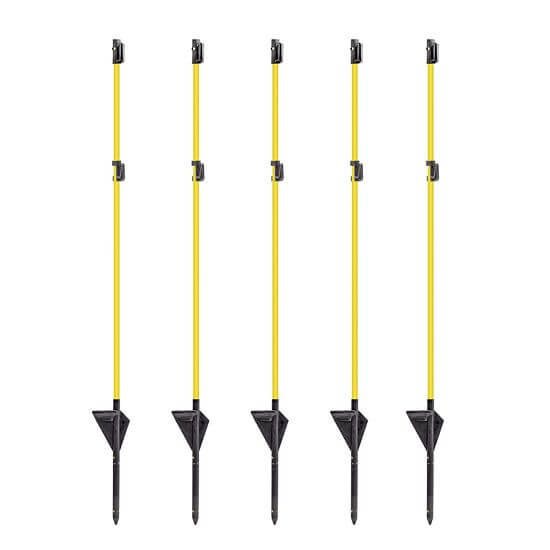
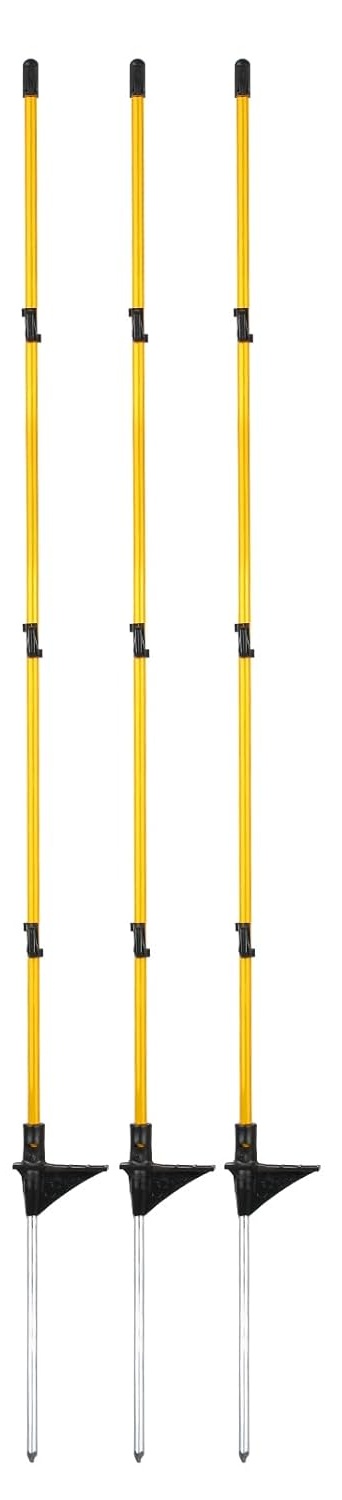
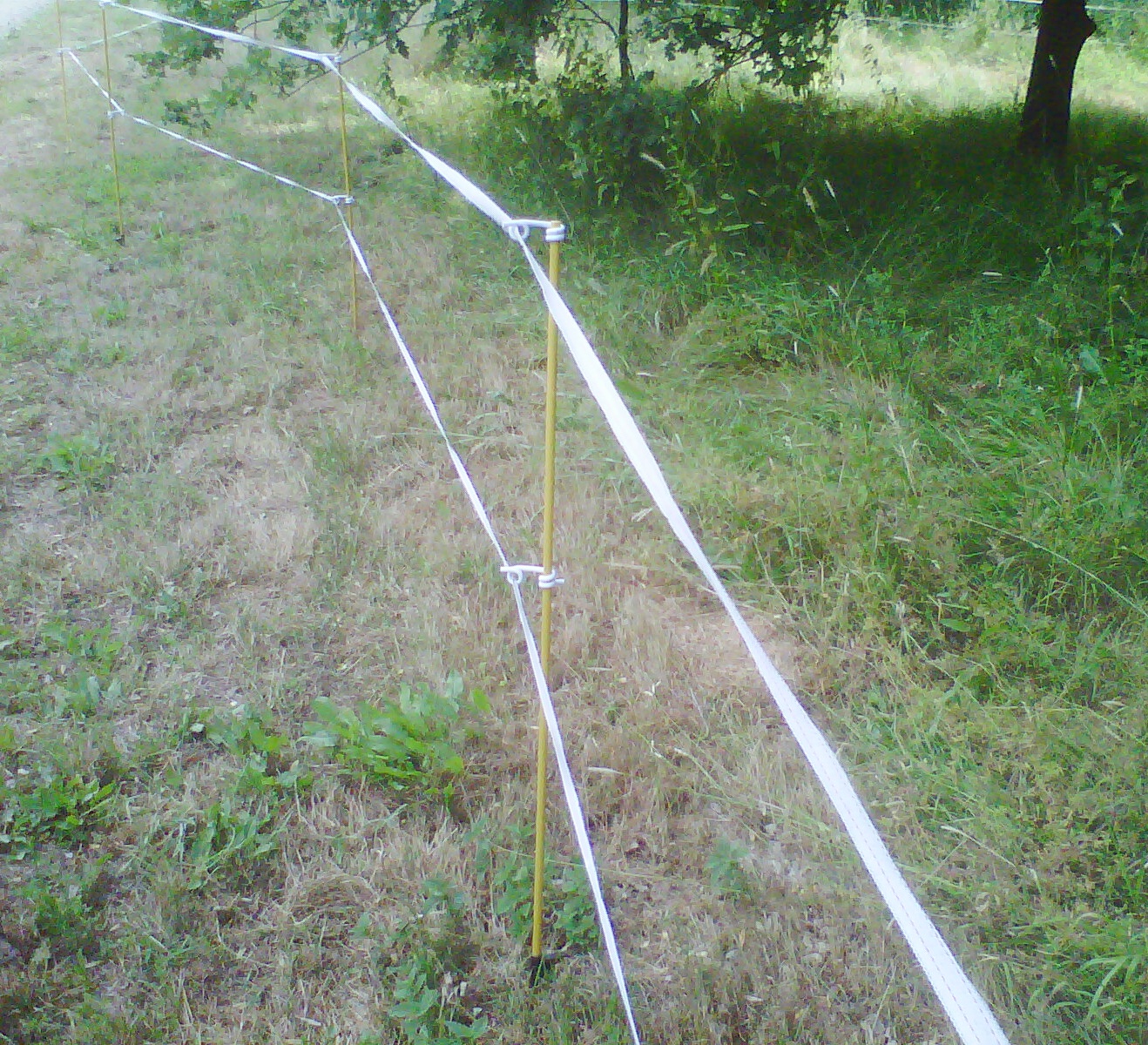
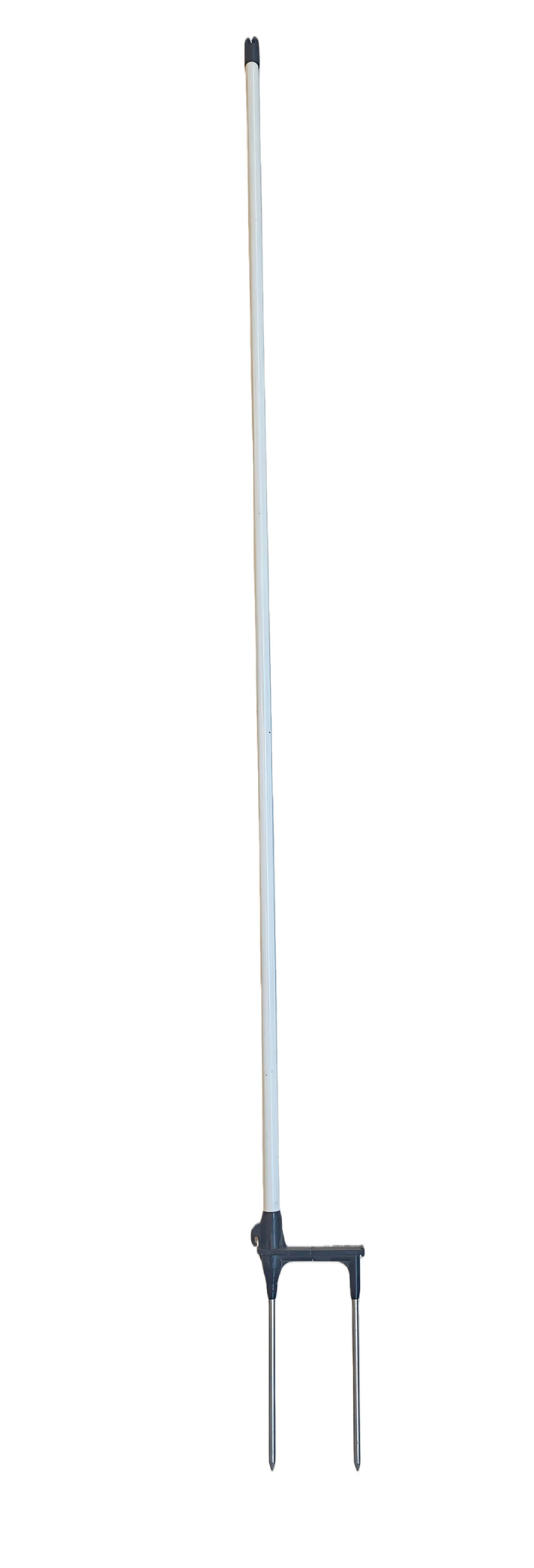
Pulwell Fiberglass Rods provide a sturdy solution to solid runs, portable fencing, and 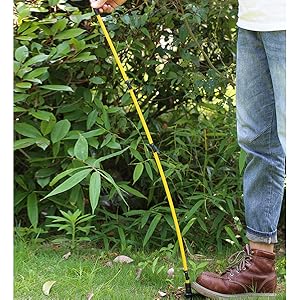 rotational grazing. These durable, flexible, and affordable posts are simple to relocate, install, and attach various products such as poly products, soft wire, high-tensile wire, tape, rope, and twines, as well as different types of netting.
Pulwell fiberglass step-in posts are excellent for use when traveling with animals, serving as temporary fencing, Field & Paddock Fencing, and as a practical solution for gardens, landscaping, events, or other areas that require quick or temporary fencing because of their low weight, low volume as well as long life. They are coated with UV protection for sunlight resistance and are adaptable to all weather conditions.
Main advantages of Pulwell step-in fiberglass posts:
★ Lightweight & Durable Material:
The posts are constructed from very light yet rigid high-strength fiberglass, offering insulation, corrosion resistance, non-conductivity, and resistance to heat and cold. They are self-insulating, capable of withstanding 2,000 volts without causing short circuits, ensuring safety for livestock and electrical fencing systems. They are resistant to rust, rot, and insect infestation for up to 50 years.
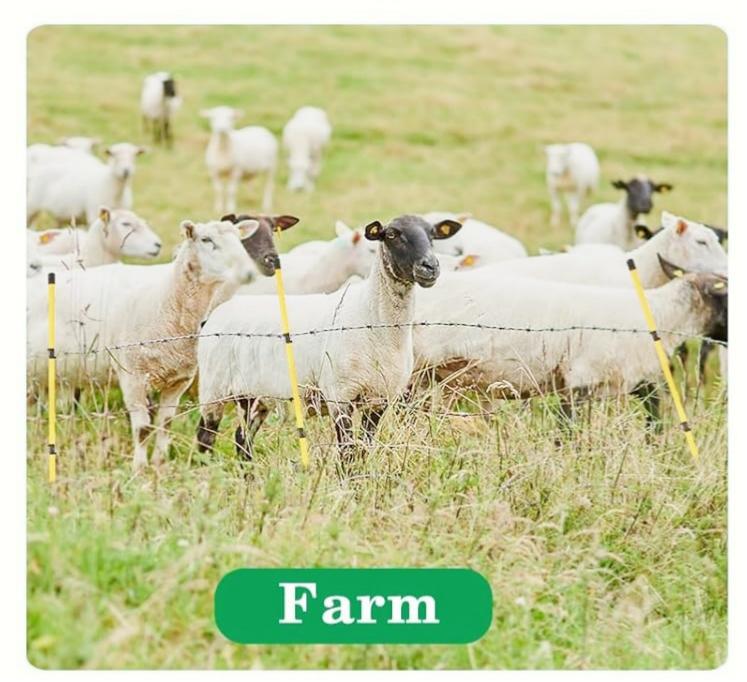 ★ Extremely flexible: they can return to an upright position immediately after bending and do not break, unlike plastic posts.
★ Quick, Simple, No-Dig & Tool-Free Installation:
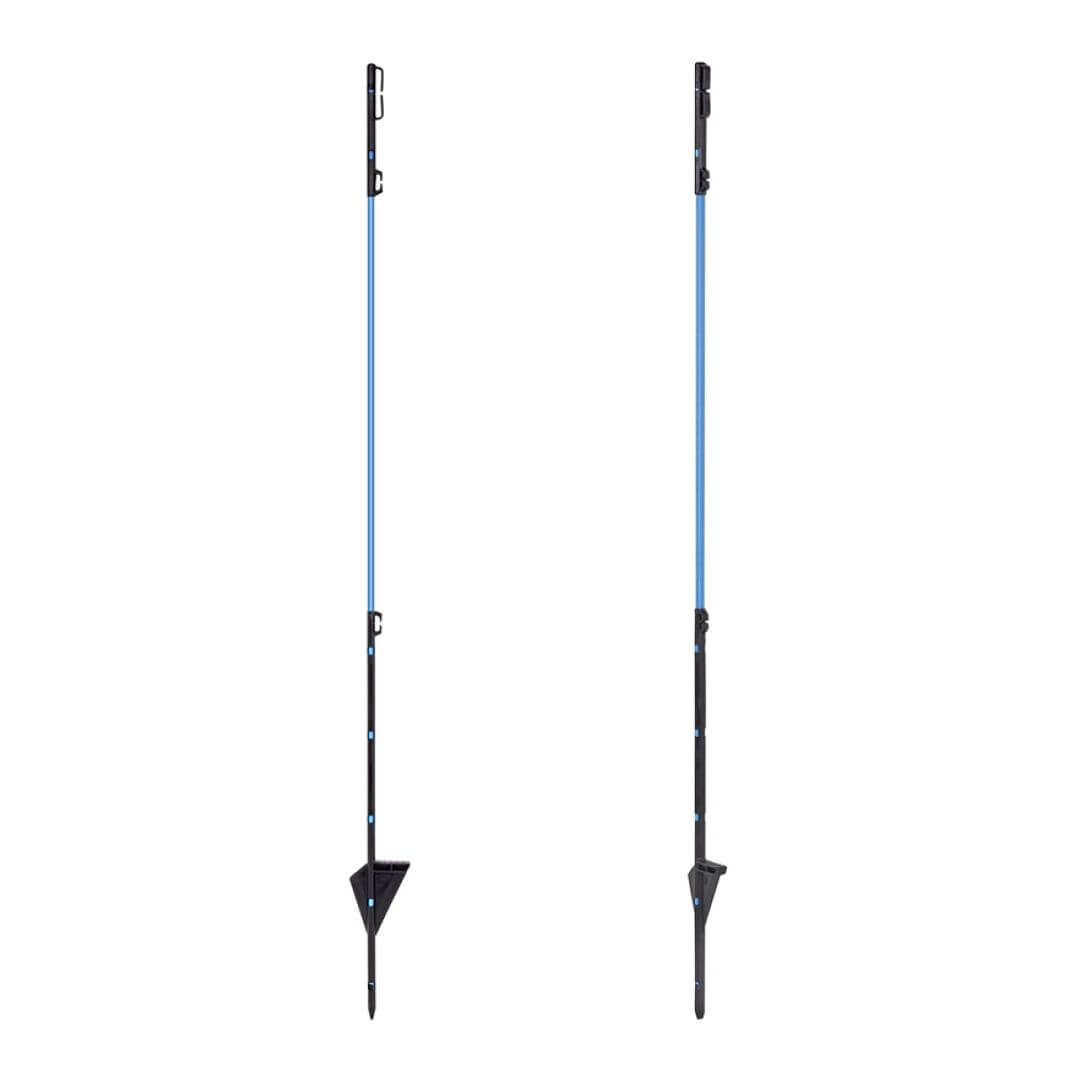
The pedal-step design with a pencil end or heavy-duty galvanized steel spike drives into the soil effortlessly—no tools or digging required. An anti-rotation mechanism ensures stability on uneven terrain.
★ Multi-Scenario Versatility:
Ideal for gardens, patios, livestock, netting, snow fences, cropping & pasture management, or wildlife barriers. Portable and reusable—simply pull them out and reuse them anywhere, anytime! Suitable for temporary or permanent fencing, electric fencing, or non-electric fencing.
• Residential Applications: Ideal for backyard fences, garden enclosures, pool safety fences, and property boundary markers. Its lightweight nature and aesthetic appeal make it a popular choice for home landscaping.
• Commercial Applications: Suitable for commercial property fencing, parking lot perimeters, construction site barriers, and retail store security fences. Its durability ensures long-term protection for commercial assets.
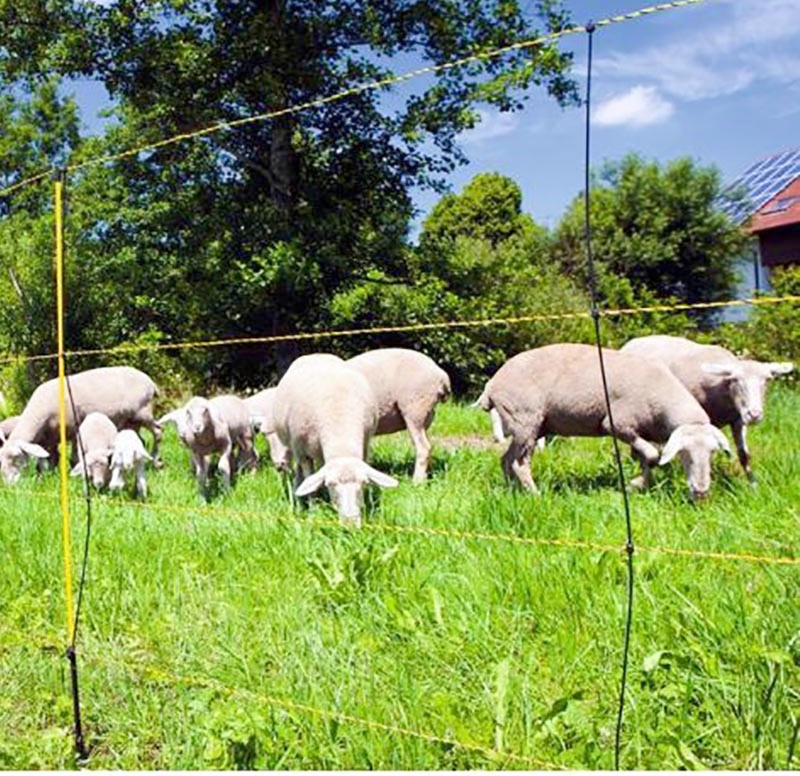 • Agricultural Applications: Perfect for livestock fencing (cattle, horses, sheep), crop field enclosures, and farm boundary fences. Resists damage from livestock and chemicals, and its non-conductive property is safe for electric fencing setups.
• Industrial Applications: Used in industrial facility perimeters, warehouse partitions, and utility site fencing. Withstands heavy impact and harsh industrial environments, including exposure to oils and chemicals.
• Specialty Applications: Coastal fencing (resists saltwater corrosion), cold-climate fencing (withstands freezing temperatures), and recreational area fencing (e.g., parks, playgrounds) due to its safety and durability.
Frequently Asked Questions (FAQs)
Q1: Can fiberglass step-in posts handle heavy livestock like adult cattle?
A1: They are designed for young or small livestock (calves, sheep, goats, poultry). For adult cattle, use 4 ft heavy-duty fiberglass step-in posts (0.18 in wall thickness) with high-tensile mesh—but they work best for temporary dividers, not permanent perimeter fencing. For full-grown cattle, pair with 7-8 ft standard fiberglass posts for long-term use.
Q2: How deep do fiberglass step-in posts need to be inserted?
A2: Insert them 6-8 in (15.2-20.3 cm) into the soil—just press the step tabs with your foot until the post is stable. This depth is sufficient for temporary fencing (sheep/poultry) and allows easy removal when relocating the fence. In loose soil, add a 2-in layer of gravel around the base for extra stability.
Q3: Are fiberglass step-in posts compatible with electric netting?
A3: Yes—they are the best choice for electric netting. Opt for posts with built-in insulators (or add clip-on insulators) to keep the netting charged. Fiberglass is non-conductive, so it won’t leak electricity like metal step-in posts, ensuring the fence deters livestock and predators effectively.
Q4: How long do fiberglass step-in posts last in outdoor livestock environments?
A4: They have a 10+ year lifespan in US/EU agricultural settings. UV inhibitors prevent brittleness in sunlight, and corrosion resistance withstands rain, snow, and animal waste. Unlike wood step-in posts (which rot in 2-3 years) or metal posts (which rust in 5-7 years), fiberglass posts require no replacement for a decade.
Q5: Can I use fiberglass step-in posts in frozen or rocky soil?
A5: For frozen soil (EU Nordic winters/US Northern states), thaw the top 2-3 in of soil with a portable heater before installation—this lets the post insert easily. In rocky soil (US Southwest/EU Alps), use a small post hole digger to create a 4-in pilot hole first—this prevents the post from cracking during stepping.
Q6: How many fiberglass step-in posts do I need per acre for sheep grazing?
A6: For sheep, space posts 8-10 ft (2.4-3 m) apart for electric mesh fencing. This equals 43-54 posts per acre. For non-electric mesh, space them 6-8 ft apart (54-72 posts per acre) to prevent sheep from pushing through the netting.
Q7: Do fiberglass step-in posts fade in the sun?
A7: No—they are infused with UV inhibitors during manufacturing. In US Southern states (e.g., Florida) or EU Mediterranean regions (e.g., Spain), they maintain their color (white, green, brown) for 10+ years without fading. Unlike plastic step-in posts, they won’t become brittle or crack in intense sunlight.
Q8: Can I recycle fiberglass step-in posts at the end of their lifespan?
A8: Yes—fiberglass is recyclable at specialized facilities. Many US/EU agricultural waste programs accept fiberglass posts (check with your local waste management or farm bureau). This aligns with sustainable farming practices (EU Green Deal/US Farm Bill sustainability goals).
Q9: Are fiberglass step-in posts safe for backyard poultry (chickens/ducks)?
A9: Absolutely. Their smooth, splinter-free surface prevents feather damage or foot injuries to poultry. The 3 ft length is ideal for chicken runs (48-in netting), and they’re lightweight enough to move weekly for fresh forage. They also resist manure buildup—easy to clean with a hose.
No.20 Lianhong Road, Torch High-Tech Industrial Zone, Zhongshan City, Guangdong 528437, PRC
Copyright © 2025 Pulwell Composites Co., Ltd. All rights Reserved
Tel:+86-760-86133399, Fax:+86-760-86133398